Interview with The Beast
March 27th, 2016

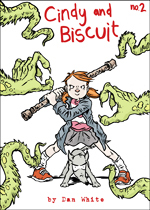
Our very own Dan White (aka The Beast Must Die) has been interviewed by Matt Colegate for The Comics Journal! Colegate talks to The Most Handsome Mindless* about Terminus, Insomnia, Cindy and Biscuit, writing for this site, and the development of his art style, and it’s all well worth a read if you like what’s best in life.
A teasing excerpt:
When did you start noticing that your style was developing? Was it an incidental discovery or was it something you were working towards?
There’s a hodgepodge of influences that I can see in everything I do, but it’s nice that a style has formed. When I’m doing a brush stroke I’ll be thinking “the way I’ve drawn those bushes is really Bill Watterson.” The style also came out of admitting that I didn’t have to do figurative art work. I could still tell stories that I liked by using cartoons. I should say that the biggest influence in my life is Chuck Jones. Seeing the Warner Bros. cartoons broke me forever.
So you were quite strict about wanting to be a cartoonist?
I just admitted, y’know, “You’re not going to be Simon Bisley and you’re not going to be able to draw Batman”. Nor would I want to. My uncle was an illustrator and I used to look at his work and the looseness of the brush work used to really appeal to me. When I realized I could tell the stories that I wanted by cartooning, and not being a slave to anatomy and photo-referencing, that was really liberating and I think the style developed there. It was quite organic.
A lot of your work – Terminus for example, which you did weekly for Mindless Ones – consists of single panel pieces. What is it that appeals about that format?
The one panel strip is traditionally used for political cartoons or simple visual gags, but I wanted to explore what you could do. They were like haiku experiments in paring down the text. Doing it on a weekly basis was great – doing anything on a weekly basis is great because it’s a way to refine your style – and I noticed that I was getting much better at paring the words down. I wanted to do something that wasn’t necessarily funny. What about if you had a one-panel comic that just disturbed you, or made you feel a bit sad? Somebody on the internet said “It’s like a fortune cookie that you open up and inside there’s an obituary.” That was the perfect description of what I was trying to do. He didn’t mean it as a compliment but I put it on the back of the first collection anyway. It was about trying to capture something and suggest a whole world in a panel. There was a nerdy element also, because I got to tell a science fiction or horror story simply. Horror is a thing that comes up again and again in my work and Terminus was a good way to flex some of those muscles.
If you’ll forgive me for sliding straight into huckster mode – this is the internet in 2016, after all – I’ll just right ahead and say that if the interview put you in the mood to read/buy Dan’s comics, we can help you out with that!
I mean just look at this sequence, from the most recent Cindy and Biscuit book:

SERIOUSLY – BUY DAN’S COMICS!**
***
Footnotes:
*Aside from Gary Lactus, who is of course the face of bad backs, and also – in his ridiculous stage name of “Fraser Geesin” – Jack of All Polymaths.
**Unless you’re broke, obviously. We don’t actually want to bankrupt you or anything. Or at least, The Beast Must Die doesn’t…
Illogical Volume S.M.A.S.H.
February 5th, 2016

If you’re in or around London tomorrow, I’ll be speaking about comics art and community intelligence at this event. I’ll be on a panel with Katriona Chapman, Hannah K Chapman, Maggie Chapman and Mark Stafford, so even if I’m reduced to shouting the words “ART PARAGRAPH!” over and over again, the other speakers should ensure that it’s not a total disaster.
As you can see from the poster above, I’ll be in good company, with friend-of-the-site Kieron Gillen, artist extraordinaire Alison Sampson and free-roaming Mindless element Kelly Kanayama/Maid of Nails also speaking words at the event. The SILENCE! boys will be attendance, and the whole thing will almost inevitably end in drunken tears, so please – JOIN US!
Flashback to… Kevin O’Neill!
December 7th, 2015
LIFE TURDS have prevented me from finishing my long promised post on Julia Scheele‘s comics, so here’s a quick ramble about the dick-slap aesthetics of Nemesis the Warlock and Marshal Law that I stole from my own twitter account…

Matt Maxwell once asked me if I had any thoughts on NEMESIS THE WARLOCK. I do, and they’re all blurred by time & distance but here we go!
In Alec – how to be an artist, Eddie Campbell described Mills & O’Neilll’s NEMESIS as “the wicked satire of a rejected Catholic upbringing”. I wouldn’t presume to be able to improve on that description, but it does point towards what’s so good about *O’Neill’s* NEMESIS.
Don’t get me wrong, plenty of good artists have drawn NEMESIS (including Bryan Talbot, for fuck’s sake!) but O’Neill made it look *naughty*. This is what separates his baroque atrocities from similar dystopias (Warhammer 40K, etc): the heavy metal fanfare never obscures the man.
Adaptation(s): 9 Statements for the London Graphic Novel Network
December 4th, 2015

In the spirit of The Beast Must Die’s (excellent) contribution to that S.M.A.S.H. event, here are nine statements on movie adaptations:
1. The only good adaptations are the ones that take maximum liberty with the details of their source material. Think of the way Blade Runner strips Philip K. Dick’s novel down to its bare bones then builds a damp, wheezing engine on top.
2. Adaptations that are painstakingly faithful to the surface details of their sources provide a unique opportunity to see the original clearly. Dave Gibbons’ contributions to Watchmen have never been more obvious than they were in the light of that movie, which mimicked the composition of so many of his panels while conveying the weight of none of them.
3. The only good adaptations are the ones that overlap with their source text in a way that creates a separate, overlapping narrative – see, for example, the mix of hyper-fidelity and brutal compression in Scott Pilgrim vs. the World.
4. Different mediums have different strengths and affordances so it makes sense to identify the things that, say, a book does that a movie can’t before trying to turn one into the other. The delicate waltz between Charlie Kaufman and Susan Orlean in Adaptation is proof that this approach can pay off.
5. Becoming overly fixated on the process of adaptation can easily become an excuse not to solve the underlying problems, hence why the “delicate waltz” of Adaptation ends with one dance partner farting a hole clean through his trousers.
6. A memorable performance in an adaptation of a favorite work is a gift to the source material. The wobbly PG camera work might neuter The Hunger Games movies as movies, but Jennifer Lawrence’s performance brings something extra to the Katniss of the books.
7. A memorable performance in an adaptation of a favourite work is a curse to the source material. There are lines in the Scott Pilgrim comics that I cannot read without hearing Michael Cera’s voice now, and this is not always appropriate for the rhythms of Bryan Lee O’Malley’s work.
8. The best thing an adaptation can do is to provide financial security to a working artist. Eddie Campbell and Alan Moore both live in the house that Jack built now, and this alone is enough to justify the Hughes brothers version of From Hell.
9. All adaptations are equally useless.
None of the above should be taken as anything other than an endorsement of our rolling Omni-brand, Lego be praised and all hail The Virgin Money Street of Light™!
You can read more on movie adaptations and Scott Pilgrim vs. The World at the London Graphic Novel Network site, including a very sexy poem about your inevitable doom by the Kraken podcast‘s very own Martin Mazin!
Flashback to… Deadpool?
November 25th, 2015
As previously established, middling superhero comics are so much better when you read them for free from the library, but what about mediocre comics you valued at an earlier age?
What about ones that feature characters whose longevity seems baffling? Characters who you had assumed would have died with your dreams of a better life but who will soon be starring in their own movie at a cinema near you? What about bloody Deadpool?
Deadpool, #2-11, by Ed McGuinnes, Joe Kelly and various

5 For Friday – Post Thought Bubble Special!
November 20th, 2015
I might have come away from the Thought Bubble comics convention with a terrible hangover and an overwhelming desire to have a proper rummage through the back issue bins, but I can’t say that I came back short of good zines, great comics and better memories.
Here are five of the most exciting books I picked up last weekend…
1. Jonathan Chandler – Another Blue World (Breakdown Press, 2015)
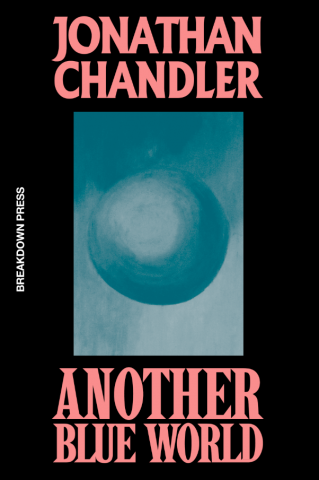
At last Saturday’s SILENCE! x Breakdown Press interview panel, Jonathan Chandler was discussed as an artist who had staked out territory similar to that which Brian Chippendale had occupied but who had got there before it became a trendy holiday destination for art house cartoonists.
I’m not familiar enough with the man’s work to debate these claims, but reading Another Blue World what struck me was how important Chandler’s elusive sense of space is to communicating this particular set of hostile environments:

It’s not so much that Chandler is limiting what the reader can see to a few tufts of grass or a short stretch of water around his characters that makes his work stand out, more that he seemingly feels no pressure to fill up blank space on the page.
In a Brian Chippendale comic we might find ourselves feeling overwhelmed by the amount of detail, struggling to distinguish signal from noise whether we’re faced with the tiny cramped panels of Maggots or the wider canvases of If’n Oof or Ninja. In Prison Pit we are confronted blocky horror after blocky horror, but we know that this grim escalation will follow proceed through the sort of absurd escalations that are Johnny Ryan’s speciality.
Reading Chandler’s work, meanwhile, we are confronted with an eerie silence. All around us, we find unreadable white space, all of it primed with danger. Forms approach, assaults are perpetrated, sex is weaponised, but we can never be sure whether things are going to get worse or just sort of hang there:

I might crave for something beyond this harsh replication of animalistic imperatives, but there’s no denying that Another Blue World makes them painfully vivid.
Justice Leagues of America: New Maps of Hell
November 19th, 2015
JLA Classified: New Maps of Hell

Written by Warren Ellis, drawn by Butch Guice, inked by Mike Stribling, coloured by Dave Baron, covers by the unforgotten nightmares of the 1980s
I struggled to get past the first few pages of this, felt totally scunnered by the pissy, huffy Clark Kent of the story’s opening. I mean seriously, just take a look at this dick:

As someone who disdained the guy who ran our local comics/toy corridor for his enthusiastic blather about how Clark Kent/Superman represented a perfect combination of action and humility, patience and wit, even I can’t get behind this version of the character now. The opening of this story, in which Clark throws a hissy fit when he gets fobbed off during a murder investigation, is one of those moments where you can feel the comics’ authors looking up you from the page, so sure of their superior intellectual position, of their mastery of facets of the adult world beyond the ken of your average comics reader that they want to look you right in the eye and teach you how to be a grown up.
The fact that this ascended mastery is demonstrated through the (metaphorical) detailing of Superman’s ironing arrangements is not supposed to concern us – somewhat remarkably, we are simply supposed to marvel at the fact that someone has actually thought about this shit!
So: don’t get me wrong, there’s much in this world to get angry at, I just expect this character to be a little more witty and subtle in his machinations. But no. Clark Kent, he’s a journalist right? He’s a hard-ass, he’ll keep on pushing the point until something breaks, he probably drinks too much coffee and complains about being an old man with all the other technogoths down the pub at night, he’s… just another hack prick, basically. Acht, it “makes sense” I guess, but not in a way I’m particularly interested in. Guice needs to take as much of the blame as Ellis for this, given that his Kent expresses his frustrations with the honking venom of a man who’s not shat right in weeks.
Hard Bastards With Big Truncheons – The Sexual Politics of Mega-City One
November 15th, 2015
Living legend David Wynne has commissioned me to write 500 words on this topic. Last night in the pub he teased me with the idea that I was going to be tasked to write 500 words on Frank Miller: Feminist Icon.
Having worked out my pitch for that one in the shower this morning (it’s actually really easy to read his work as an extended deconstruction of chauvinist tropes… so long as you just DON’T LOOK AT THE WOMEN IN HIS COMICS and only pay attention to the men – not an approach that’s conducive to feminist values, hence why this reading of Frank Miller is unlikely to catch on anytime soon) I now find myself face with a far more daunting task.

Five hundred words on “Hard Men with Big Truncheons: The Sexual Politics of Mega-City One”. I mean seriously: what can you say about this subject? What can’t you say?
Casting about for a place to start that wasn’t the bathroom, I asked Douglas Wolk…
“Beard Prick” – Sleeping Dogs reviewed
November 13th, 2015

Sleeping Dogs – Cabal Press 2015 – written by Fraser Campbell, drawn by Lautaro Capristo, coloured by David B. Cooper and lettered by Colin Bell.
“One reads so few comics that are truly juvenile, knowingly juvenile and proud of it” – is that true? If not, why did it hit me with the force of a thousand failed understandings when my pal Plok said it, in relation to Millar/Hitch’s work on The Ultimates?
If it’s not true, why does it feel that way? Is it because I’m disconnected from my more juvenile instincts now that I’m a high-faluting comics critic on the internet, or is it just that I don’t encounter comics that play to my own juvenile tastes that often these days? Having read Sleeping Dogs, I’m starting to think that the latter might be the case.
It knows that it’s a bit crude, Sleeping Dogs, which isn’t to say that it’s particularly gross or shlocky in comparison to fairly mainstream things like, say, Takeshi Miike movies or Mark Millar’s creator owned comics and their Hollywood adaptations. You don’t get the feeling that Campbell, Capristo and co are trying too hard to shock you or that they’re fundamentally damaged in some way when you’re reading Sleeping Dogs, but it has a rude energy to it. It reminds me of Philip Bond comics, of Garth Ennis when he’s almost-but-not-quite being too much of a piss-taking arsehole, of a million silly alternative roads for British comics that could have been well-stomped post-2000AD and post-Deadline but which are perhaps a little more neglected than they could be.
It’s tempting for me to overdo this UK comics connection, so strong is the appeal of this book’s big faced hardmen to me…

…but for all that the shabby locale (a run-down tower block) and the clipped, action movie patter put me in mind of those comics, it’s worth remembering that Capristo is Argentinian. I know little of the man or his work, let alone of his living environment, but I think I know what he likes in his comics and I like it too.