Doctor Who: Fifty Stories For Fifty Years: 1999
August 1st, 2013
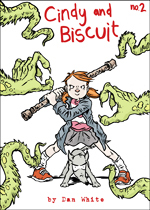
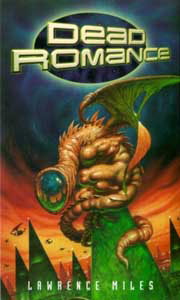
Dead Romance is one of the best novels I’ve ever read, and it’s a novel that will never, ever, reach the readership it deserves.
Doctor Who: Fifty Stories For Fifty Years: 1998
July 26th, 2013
While the Eighth Doctor Adventures had taken over the Doctor Who name and character, the Virgin New Adventures series hadn’t given up. In fact, freed from being a Doctor Who series, at least in name, it had something of a late flourishing.

The stories instead followed the character of Bernice Summerfield
Doctor Who: Fifty Stories For Fifty Years: 1997
July 25th, 2013
Over the course of our history we’ve seen that there have been a handful of creative figures who have dominated particular periods of Doctor Who. When those figures have fit with what one might call the spirit of the show — people like David Whitaker, David Maloney, Robert Holmes, or Christopher Bidmead — the results have occasionally been stunning.


Doctor Who: Fifty Stories For Fifty Years — 1995
July 2nd, 2013
There are two very different ways of looking at the character of the Doctor — two mutually-contradictory views of the character that have usually remained unspoken but which have fuelled decades of fan arguments, many of which have been proxies for one or other view.
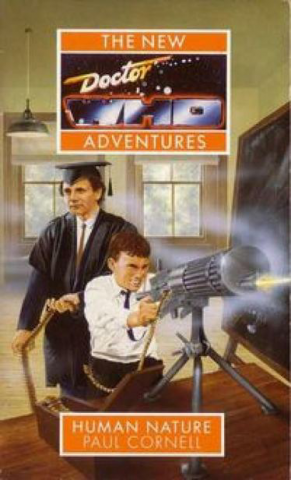
The first is that the Doctor is not, in himself, a particularly special person.
Doctor Who: Fifty Stories For Fifty Years — 1994
June 30th, 2013
By the early 1990s, it had become clear, despite the BBC’s occasional claims otherwise, that Doctor Who would not be returning to the TV any time soon.
While the New Adventures were an acceptable substitute for many Doctor Who fans — and in the opinion of many even an improvement on the TV show — there were those who simply weren’t satisfied by words on a page, and needed to see old character actors being menaced by improbable monsters before they could feel fully happy.

Doctor Who: Fifty Stories For Fifty Years — 1993
June 29th, 2013
By 1993, Doctor Who is a potential, rather than an actuality. The TV show has been off the air long enough that it could realistically be revamped, not just brought back. It’s not a TV series any more, but an idea for a TV series — an idea which can be done in many different ways.
Particularly, there were two ways that the series could be dealt with. The first, and perhaps the most obvious, was to make it ‘darker’ and more ‘cult’.

Doctor Who: Fifty Stories For Fifty Years — 1992
June 23rd, 2013
One of the things that people who want to defend the Doctor Who produced in the sixteen years the show was off the air often say is that it was hugely influential on the programme once it returned to TV.
Doctor Who: Fifty Stories For Fifty Years: 1991
June 9th, 2013
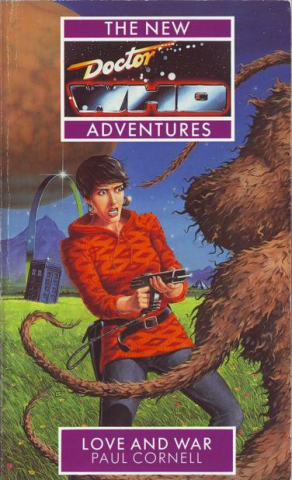
By 1991, Virgin Books (who had bought up Target some years previously) were rapidly coming to the end of the TV stories they could novelise, and there was no likelihood of a new TV series coming out any time soon. There was only one thing for it.

They’d have to hire people to write some new, original Doctor Who stories.