IT IS THE YEAR 2025!
May 26th, 2025
From secret staging grounds on two of Cybertron’s moons, the valiant MINDLESS ONES prepare to draft some short comics reviews…
Metamorpho: The Element Man #5 – Steve Lieber (art), Al Ewing (script), Lee Loughridge (colours), Ferran Delgago (letters)
Issue after issue, Ewing and Lieber find new ways to turn the language of groovy “educational” comics into an invitation to play. My favourite individual example of this so far is in issue #3, a two page spread drawn like a maze puzzle for kids/timefuct beatniks, with inserts showing our heroes blundering through a series of traditional perils.

Without this fundamental conceit, and its perfect extension of “a solid chromium foot… one of the hardest substances in the human body” into a bespoke absurdist aesthetic, some of this comic’s barbs against “A.I.” would have felt like mere prompts for applause. As it is, they’re of a piece with the Mad Mod’s monologues, or this issue’s grand duel between solar avatars – carefully arranged incongruities set in opposition to the banal ones our culture is producing en masse.

Resistance is all about finding the space in between the circuits, you see. Easier for Element Woman and Andor than you or me, but don’t let that stop you trying, Metamaniacs!
Batman/Superman: World’s Finest Annual 2025 – Dan McDaid (art), Christopher Cantwell (script), Mark Waid (story), John Kalisz (colours), Steve Wands (letters), Dan Mora (cover)
Let me pay this comic one of the highest compliments I know: having read it, I don’t need to read any of the other issues in this series. This despite the issue in question being part 3 of a 6 part crossover between this comic and Justice League Unlimited. Writing an entertaining single issue under these conditions is a distinct formal challenge, and Cantwell and Waid have a lot of fun with it here, loading up a villainous plan with a twist that is both skilfully foreshadowed and compelling in its own right.
Artist and friend of the blog Dan McDaid has been doing some great work over at DC comics lately, finishing up extended runs on Kneel Before Zod (with Joe Casey) and Shazam! (with Josie Campbell). Zod provided plenty of opportunities for McDaid to flex his big boy drawing arm while depicting rugged action against a series of classic sci-fi landscapes. Shazam, meanwhile, showed that he could provide moments of formal play and true menace in an otherwise amiable fantasy.

This World’s Finest annual is all about the villains, though, and its chief appeal – beyond the old school comics writing craft mentioned above – is the amount of fun McDaid has drawing these goons. My favourite moment comes in this panel, where Bizarro, Cheetah, Lex and the Joker contemplate their own dark futures.

I don’t know which detail I’m most fond of here, Bizarro looking like he am no shat his pants, Lex and Cheetah’s duelling eyebrows, or the Joker’s stream of consciousness slowing to a trickle as he doubts his life choices and the company he keeps.
The annual is full of wee bits like this. Plastic Man swamping the villains and the page itself; a fun collision between Superman and Bizarro; some impeccable disdain from Lex. The art of providing familiar pleasures is easy to underrate until you realise how seldom it’s done well.
Blood & Thunder #1 – E.J. Su (art), Benito Cereno (script), Msassyk (colours), Rus Wooton (letters), Robert Kirkman (co-creator)
Good fun, this. Solid designs, and I could stand to learn more about the gun and the lady with the red mist. Blood & Thunder was already recommended by Andre Whickey on the Mindless Ones newsletter and by Little Kieron Gillen through official channels. The 2000AD comparisons might have set me up to expect a bit more Thrill Power than this issue was able to deliver, though. An unreasonable grumble – this isn’t a weekly comic strip, no need for it to deliver discrete entertainments and novelty every few pages, and the last few times I’ve read 2000AD it hasn’t truly delivered on this front either.
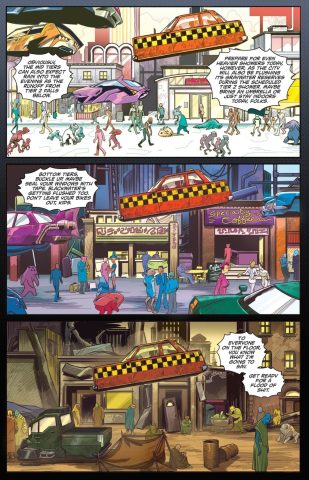
Still, Blood & Thunder #1 is strongest where the density of information is thickest. Pages 2 and 4 are particular standouts, presenting the reader with two very different ways to visualise a complex environment, and linking the wide view to the grounded experience of the different levels of this society with some properly chewy narration.
The issue soon settles into an extended action sequence followed by some procedural intrigue, and while there are plenty of eye-catching details along the way, I’ll admit that sequences like these aren’t fully holding my attention right now. On a related note, I admire Joe Casey’s tongue-in-cheek designation of Weapon X-Men as “blockbuster comics“, even if I’m not particularly convinced by the mode it describes (“Once again, it’s time to show movies and video games how it’s done.”)
Robert Kirkman closes out this issue by providing the origin of the title, an un-sourced Jack Kirby quote: “Good comics have to bring the BLOOD & THUNDER.” I agree but I’m greedy, I want more of both all the time.
Absolute Green Lantern #2 – Jahnoy Lindsay (art), Al Ewing (script), Lucas Gattoni (letters)
Another comic where the pacing might trouble you, though unlike the first issue of Blood & Thunder, this question doesn’t present itself until you hit the last page of an issue. The mood of Absolute Green Lantern is impeccable. Two issues of aftermath, everyone dazed, transformed; a sense of enclosure mixed with the certainty that you’ve encountered something bigger, something that may yet change or annihilate you. There’s a resonance with experience here – the way that encounters with true horror can make your world feel both impossibly huge (“it’s all around you”) and deeply oppressive (“it’s all around you!”). And yet, two issues in a row now, the story has been over before we’ve had a chance to get really dreamy with it.

A classic “It’ll read better in the trade,” then? Most likely. The pacing so far has reminded a couple of us of [REDACTED]’s writing in the later stages of [REDACTED], except… in an earlier era of the comics internet, we used to say ART PARAGRAPH as a way of talking about the art while also acknowledging the way this was often treated like an afterthought. So, ART PARAGRAPH: I’m actually not so sure these first two issues have been paced the way I think they have. Looking back over issue #2 now, the layouts are more varied than I remembered, alternating between dense dialogue scenes and moments of pure spectacle. There’s a lightness to Lindsay’s art, an absence of weight that I wasn’t sure about at first. At times the eye almost glides over the page – like Botswana Beast said, it makes more sense in digital. I wonder if that quality has something to do with how these issues seem to be over before they’ve begun. I wonder how they’ll feel when there’s enough Absolute Green Lantern in front of us for our minds to try to focus on this bright absence for a long time.
“Remember when comix used to be transgressive?” – Anya Davidson
Or a little story we’d like to call, CRISIS OF INFINITE ALT COMICS! Even as a Dog Biscuits appreciator, I found Ramon’s two responses to Alex Graham’s “white guilt” missive entertaining: “oh Rabbit’s left to make more subversive art of cartoon animals taking drugs. ok.” Complaining that most art is shit is pastime as old as art itself, but if you frame the whole thing in terms of race by literally writing the words “white guilt” on your otherwise undefined, fundamentally callow shit art enabler… people are going to draw the conclusion that you really wanted in on the big loser sad sack energy of 2025, sorry.
I’m also not convinced people are scared to like or make or talk about comics. Unless we’re saying “People don’t want to get huckled at the U.S. border for sharing a comic that says we shouldn’t cheer on mass death in Palestine.” I can easily find some pretty fucking gnarly shit at the zine fare or doon the local gay shop, Fantagrothics are still selling yer traditional animal sex comics, and if I’ve seen several generations of comic art styles that aren’t to my taste rise and fall at Thought Bubble, that’s at least as likely to be good as it is bad.
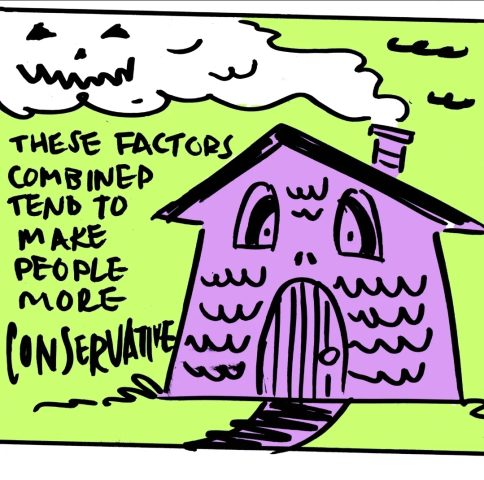
Anyway, enough of the CRISIS itself! I’m highlighting Anya Davidson’s comic here because of its formal properties – one alleged subject of this whole stramash, despite all the evidence to the contrary. There are pithy, visual nose-tweaks here for both “Orkish Breakfast Meet Cute” comics and “Spunk-flecked satire” comics here, with Davidson’s strip incorporating elements of both aesthetics without being wholly defined by either of them. Where the other illustrated works in this drama have tended to be a little static, Davidson’s contribution has an aesthetic urgency to it, a playfulness that sometimes literally spills over the edges of her panels.
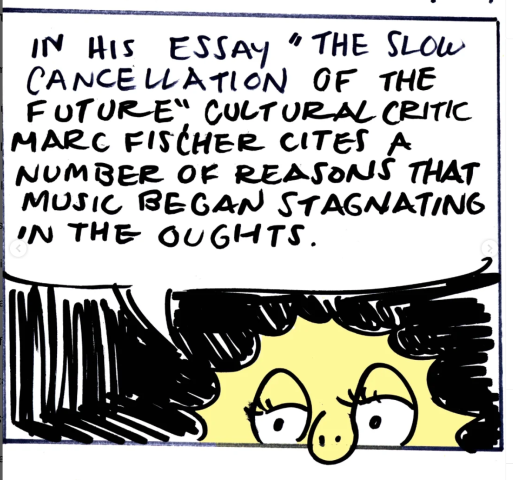
Like all the other illustrated entries in this drama, Davidson’s comic is an illustrated argument. It undoubtedly helps that the forces she identifies as shaping the demand for cutesy escapism are also the villains of my usual Friday night rants – “it’s the economy, stupid” is right up there with “not enough people are buying my friends’ comics” if you catch me after a few. Ultimately, though, what endeared me to her response was the way those hasty lines and jarring colours agitated my eyes.
Absolute Wonder Woman #7 – Mattia De iulis (art), Kelly Thompson (script), Becca Carey (letters), Hayden Sherman (cover art), Jordie Bellaire (cover colours)
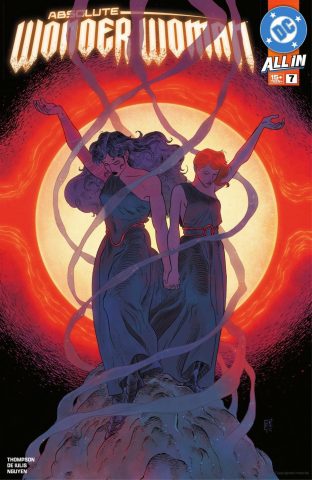
Another recipient of a gnomic write-up in the Mindless Ones newsletter – SIGN UP TODAY! Since I wrote that piece, the expectations I’m managing here are strictly between me and the creative team, which has changed since issues #1-5. I’m not sure how much my relative disinterest in the last two issues of the comic is down to the shift in scenery and how much is down to Hayden Sherman’s absence. Perhaps these are both the same thing: after all, Sherman’s depiction of Gateway City and their depiction of the underworld were bending to meet each other in the middle. It felt transformative and strange. I wanted to keep going.
Taken on its own merits, issue #7 of Absolute Wonder Woman is an effective and enjoyable comic. You could read it on its own and get something out of it – a new play on old mythology that suggests more of the same to come, illustrated in a slick, modern style by De iulis. But for me, like the last issue, it’s really just holding space until Sherman comes back and we find out what shape the story might take next.
Love and Rockets #16 – Gilbert Hernandez, Jaime Hernandez, Aurora Hernandez (cover)
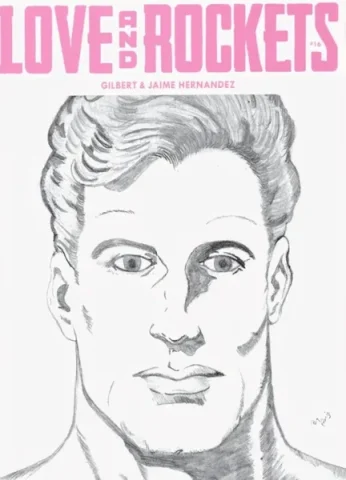
Not checked out this classic (classic) comic for a while, but here’s a good thing about Love and Rockets: it’s always there when you need it. Often bewildering and new, if you’ve been out of touch for a while, but also always familiar. Even if you’ve no idea where any given plot is going, if you’ve read Gilbert and Jaime’s work before you’ll have some idea of how it’s going to get there.
Gilbert’s story in this issue, ‘Love Is Everything’, sees him in his minimal landscape mode. According to the promotional blurb it depicts a “romp through the snow,” but at first glance I thought Guadalupe and Steve were wandering through a field of nuclear eruptions. Its narration speaks of how the couple “are deeply in love,” but there are moments where the character’s faces seem to express sadness not quite captured in these words.
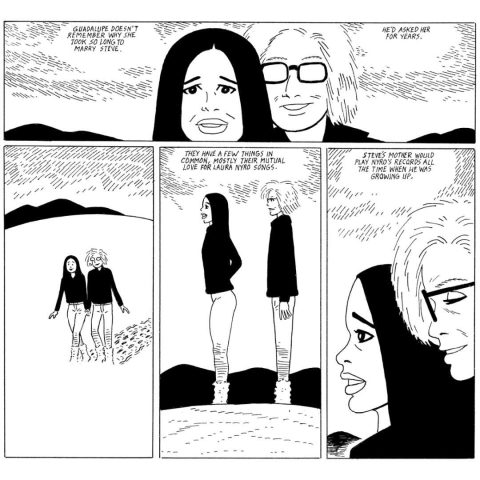
Minimalist scenes of the couple interacting are disturbed by a projection of a figure drawn by one of their parents – an old lover, “the golden man.” The narrator assures us that love is everything; the other elements of the comic remind us that “everything” is fleeting, vulnerable, crossed signals in a decaying void.
Jaime’s entry, ANIMUS, is part of a longer saga that I’ve not stepped into before. It’s one of his sci-fi super princess strips, which I tend to enjoy on a surface technical level; the pure soap-opera is a different story, or perhaps it’s a lot of them! True to form, my favourite sequence in this episode was the one where Anima is almost devoured by Jaime’s inks before battling her way back into being.
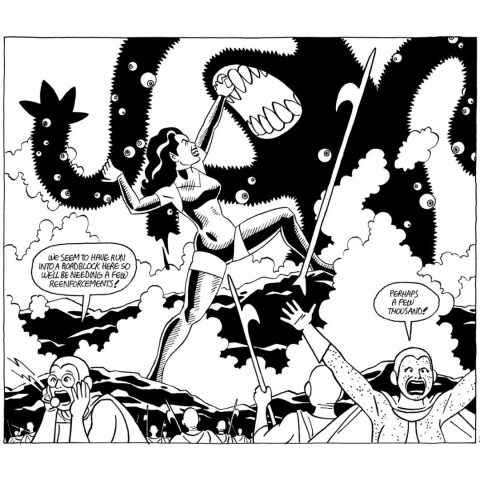
Elsewhere, Hernandez works through his own compressed version of old school fight comics tricks, interspersing images of absurdly huge conflict and intrigue with scenes where injured people scrabbled around on the sidelines. It’s like a prime scene from an early Marvel comic, or – uncool reference these days, allow it – a little bit like something Frank Miller would have worked into a comic in his prime. Different types of drama and conflict coexisting in the one space – that’s comics, baby, gimme the blood and thunder!